Tuesday, May 16, 2006

A Secondary Serial Presence Detect - TRULY, LOL!

In a world where memory is supplied by billion dollar companies with billion dollar fabs, retail memory sales is dominated by ONE large company and many many smaller companies vie for the remainder of the sales, what does one of the smaller companies do to increase profits and get noticed?
  1. 1) Put a voltage probe on your memory module
  2. 2) Give fancy colored heat sinks for the RAM chips
  3. 3) Send more and more memory to the review sites
  4. 4) Sell fewer modules even, much more expensively
  5. 5) Put a secondary, more complete Serial Presence Detect table on the chip and get a big name to endorse it

6) All of the above

Well, Corsair has been around for a long time, and it has done all of the above. This entry deals with point #5. The Serial Presence Detect is a chip introduced a decade ago, storing information on the general properties of the memory module so if a computer does query the memory module on the settings it is capable of supporting, the SPD just dumps the table to the computer so that it can adjust its own settings to support the memory module optimally based on the settings put on the SPD.

Let's not talk about normal people. Normal people don't know what SPD is, they just put memory inside, and normal computers have their SPD detection set ON by default.

But Corsair is NOT peddling memory to normal people here. Normal people buy whatever is cheapest and it's normally Kingston. Look at the Techreport link - they're putting it on their TwinX premium modules. These modules are usually peddled to poseurs or enthusiasts.

Let's also not talk about poseurs. A poseur who buys a Tiptronic Porsche Turbo (a 996, because a 997 Turbo Tiptronic is faster than a Manual and thus may not ONLY be a Poseur Car) is at least more easy to understand (he can show it off, it's loud, and he can be seen coming outta it) than a Poseur who buys a memory module and puts it into his PC then seals it up. What good is it to a poseur if he can't show it off?

So, poseurs being dangerous territory, let's just discuss enthusiasts. REAL hardcore PC enthusiasts like Shamino of VR-zone.com or even Macci. Or any of the thousands of them who lurk in Anandtech and Hardwarezone in search of project ideas, and who get their minds and hands dirty with their projects.

Enthusiasts have long eschewed SPD. And rightly so. Because no memory company can afford the days spent in stability testing to find the true limits of a certain memory module in relation to a customized motherboard or rig set-up, so no SPD describes the limits of the memory modules. Each motherboard is different, their tolerances and design are different, even different firmware revisions for the same motherboards differ in their tolerance for memory, at its limits, so any SPD which settings even approach the true limits of its host memory module, may work for one motherboard but not for another. Each motherboard manufacturer makes compromises and judgement calls on setting the limits of their pathways, and tweak their BIOSes either to the way of sheer performance or compatibility. One can't have their cake and eat it, though a good designer can come damn close.

So, now nVidia and Corsair now have this thing called EPP or Enhanced Performance Profiles. Basically it's a secondary, more complete SPD, which include `signal drive strength settings, write recovery and active refresh settings, and delay and setup times'. First, I must commend nVidia. This is completely to their interest. It makes their chips easy to use.

But for Corsair, ... , well, it smacks of the poseur gearbox syndrome (again, think Porsche Tiptronic Poseur Gearbox). Firstly, no way in hell can Corsair test each chip to the limits. And no way they can guarantee that, after months of extreme use, their module will be able to sustain the same limits it exhibited when new. So, the SPD and EPP will all exhibit very conservative settings.

So it will definitely help the poseur crowd, but for the enthusiast, nothing has changed. As long as the automated SPD and EPP does not reach the limits, they eschew it, or SCREW it.

Still, this EPP should be valuable for the normal human being or the poseur crowd. Probably Kingston ValueRAM should implement it, at least the normal humans of the world can take advantage of slightly better performance on default settings.

BS scanner off. Ambigious result.

Monday, May 15, 2006

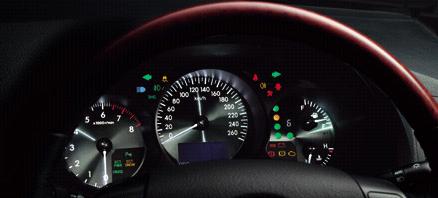
High Speed Review - 2006 GS300


On my trip back from KL yesterday, the GS300 hit something like 230km/h, but just for a while, because the road undulations were partly resonating with wheel natural frequency. I think that a wheel change to lighter one to move resonance freq to higher.

It felt good to feel the VVTI2 system (meaning, both intake and exhaust) working to optimize torque. Yes, you feel it at high load high rev (as opposed to hitting 4K rpm at 2nd gear only which you won't be able to feel), just like VTEC, only that VVTI2 is more gentle and got more steps.

At high speed in the bright daylight for the GS300, here are my findings:

Natural speed is at 180km/h without resonance. At 181 to 190kmh, the stock wheels will resonate with Malaysian roads which are based on TAR. On concrete Melaka roads, there is no resonance. This resonance stops at 200km/h, then increases at 225km/h all the way to dunno what speed, but at 230km/h still will have resonance. All speeds according to speedo, not real speed.

The GS300 speeds above 100km/h is reporting 5km/h faster than REAL speed as measured by GPS. So, at 230km/h speedo, actual is 225km/h. I think that the error is logarithmic, so my comment not so accurate.

Compared to E240 and C200 Kompressor, GS300 suspension so much better over mini-humps caused by bridges. GS300 you will not AT ALL feel frightened by the undulations, but on the Mercs, they demand flat road, undulations will make the car fly. The GS wheels kept contact at all times. So for Malaysia roads, the GS300 is much better than the E and C-classes.

Aerodynamics for GS300 is better from perspective of wind noise. The C classes, wind noise gets unbearable at 190km/h onwards, for E-Class, 220km/h onwards. GS300 at 230km/h wind noise is un-noticeable.

So high speed performance, GS300 beats the E and C classes all the way. Now just for BMW people to HONESTLY post about 3- and 5- series high speed performance please.

Engine? Wow. Damn. The 3GR-FE engine is smooth all the way to max rpm at high gears (could not reach max rpm on 6th gear, must do it at 5th, but if longer distance it is possible). The older 3-valve/cyl E240 engine.... engine sounds COARSE at high rpm high gear. C200 engine no need to say, both the M111 and M171 2l and 1.8l is agricultural at high rpm high gear. There is no fear that engine burst, if that's a more meaningful comment.

As for presence, I did not get much respect from the C-Class, or E-Class, kanchils still keep going on the fast lane even when they see my car. For the GS- it commanded more respect, apparently. The most respect I ever got was in a ML320, which was no use coz the ML320 could not reach anything higher than 160km/h without much complaint.

Post trip, for the C and E class will always get some squeaks from the shock absorber after high speed trip. Not for the GS though. No difference whether drove long or short difference, GS felt the same before and after the trip.

I have no regrets. The GS300 fits my expectations totally. Turns out that the only thing causing me to keep within 180km/h for most of the journey was that my baby sleeping peacefully.

Saturday, May 13, 2006

What next for digital cameras?

What's the next big thing? Improved noise levels? Better sensors? Motion reduction and image stabilizers? Perhaps, but these things are boring. Merely evolutionary changes, not radical enough to garner much interest.

Things looked boring until a certain remark by Herbert Keppler of Popular Photography magazine piqued my interest - a remark on High Exposure Latitude sensors by Canon. Few picked this up though, even established forums did not speak much about it. All is not lost though, here are some links which speak about this:

http://www.photo.net/bboard/q-and-a-fetch-msg?msg_id=00FfVV&tag=

http://www.popphoto.com/idealbb/view.asp?topicID=47746

Just a summary here. Digital camera sensors are almost as unforgiving as slide film - can't make too big an exposure error, else your picture will be shot. This is what they call low exposure latitude - no margin for error.

Print films like Fuji Superia gave at least 4 stops of exposure latitude, if you screwed up, all you'd need was to print 3-4 stops lower or higher exposure to remedy the error. And the result would almost be as perfect as if you had the exposure spot on. It would be excellent if digital sensor technology had this kinda latitude, and with instant preview after shooting, the percentage of usable shots would be of a higher ratio once high exposure latitude were possible on digital camera sensors.

The limitations of digital camera sensor technology was the same, whether using CMOS or CCD sensors. Though Herbert Keppler were to term this technology as increased exposure latitude, it would be easier to find out more about this technology if you were to use the equivalent `new age' term - `High Dynamic Range' or HDR. High Dynamic Range is roughly equivalent to Increased Contrast Ratio and is roughly equivalent to Increased Exposure Latitude - in this perspective all three terms refer to roughly the same thing.

After doing additional research, it was clear that Canon was not the first off the block with this technology. It was Fujifilm with the FujiFilm FinePix S3 Pro - employing 2 kinds of photodiodes in their SR CCD sensor, ones with high sensitivity (S) and low sensitivity (R) on each pixel. With the image processor combining image data from both pixels, the system can increase the dynamic range to 400% of normal sensors' 1000:1 dynamic range, which Fujifilm equates to 2 stops. More information here: http://www.letsgodigital.org/en/camera/review/30/page_1.html

This method is similar to that of HDRsoft's implementation - www.hdrsoft.com - where a camera takes 3 pictures of a similar scene, one underexposed (to better capture highly illuminated (bright) nuances), one normally exposed and one overexposed (to better capture low-light (dim) nuances, and combine all three into a HDR picture, then tone map the HDR to normal dynamic range, with the high dynamic range compressed but yet preserving the enhanced highlights and shadows, for that incredible effect you see in the picture at the beginning of this post.

The only thing not going well for Fujifilm is the cumbersome dual photodiode system, which may increase diffraction because of the interference of the light wavefronts. I have not seen this phenomemon but it has been reported in the forums as `chromatic abberation'. Unlike purple fringing, this chromatic abberation has colors of a rainbow, much like you see an oil film on water - classic evidence of wavefront interference.

Keppler says that Canon's first implementation would be on a SLR, and presumably it would be in a single photodiode to span the entire increased dynamic range. And His Venerableness says that this will happen in 2007 while Canon soldiers on with the EOS30D the entire 2006. So from this statement, seems that the world's first fully integrated high dynamic range mainstream sensor will be APS based.

So, DSLR folks, you can do your bit by not buying a 5D or 30D today, to force Canon's hand. Once a mainstream HDR DLSR comes out, you can bet Canon's lead over everybody else (yes, including the lead over Nikon) will increase to an insurpassable extent. And that would be the time I sell my entire Nikon lens collection and experience the joy of cheap (relatively) USM and IS.

Problem is that the initial use for printed photos will merely be that of increased exposure latitude since print film sucks at showing high dynamic range images. LCDs are slightly better but their dynamic range is only about 700:1 for current implementations (LG will have 1400:1 later this year in August). So tone mapping would probably be the only way to see HDR, and many will object to the the highly artificial looking tone mapped images, which to the film crowd, would be SUPER HIGHLY SATURATED VELVIA.

This is gonna be exciting.

Thursday, May 11, 2006

Reading back ... wow, I predicted Google Trends (in some way!)

Damn, reading my previous blog entries, I may have predicted Google Trends.... (released today to public).

See below:

Singapore Punches above its weight for many Google Searches
http://miketan.blogspot.com/2006/05/singapore-punches-above-its-weight-for.html

The company which knows EXACTLY what new businesses to venture into
http://miketan.blogspot.com/2006/05/company-which-knows-exactly-what-new.html

Fancy that!

Singapore Punches above its weight for many Google Searches


Google Trends allowing one to sort through several years of Google search queries from around the world to get a general idea of everything from user preferences on ice-cream flavors to the relative popularity of politicians in their respective cities or countries.

It's incredible that a small country like Singapore appears on top for so many search terms... For example, just take `Honda Odyssey' as a search term, and you see Singapore beating the USA in frequency of searches. Just click here: http://www.google.com/trends?q=honda+odyssey

Horrific embarassment too... the answer to `Who searches the word `fuck' most?' turns out to be Iran! http://www.google.com/trends?q=fuck&ctab=1&date=all&geo=all

More revelations! Pakistanis, Egyptians and Iranians seem to be most interested in `SEX', Australians are most interested in `Porn', India, Iran and Singapore are most interested in `nanotechnology', Hong Kong and Singapore are tops with `Nikon', and India and Singapore are neck to neck tops for searching `Microsoft'.

Note that all the above, is not a percentage, but true blue absolute numbers of searches from the countries mentioned. It's crazy how Singapore with merely 4.5 million people can actually reach the top for some terms. For Nikon, I would think that Singapore being one of the few trans-shipment point for cameras in the world, Nikon would arguably be greatly searched for, but the search term `Microsoft' - wow, that boggles the mind.

Possibly, Singaporeans now might be the MOST ONLINE PEOPLE in the world who use English as their search language of choice. Certainly, this phenomenon deserves more study.

EDIT: It's now clear what's happened. After numerous posts in the forums from irate users who were getting confusing results, Google put a footnote in the search results. http://www.google.com/trends/about.html#4
Google Trends calculates the ratio of searches for your term coming from each
city divided by total Google searches coming from the same city.

Means that my statement `Note that all the above, is not a percentage, but true blue absolute numbers of searches from the countries mentioned' is totally wrong. Might be that Google will let us have the absolute numbers thing in the future. So now we know that it IS a ratio, it IS a percentage. And our perceptions have to vary as such.

Seems sensible. Ratios are informative as to the interest of the countries. Now, it merely seems that Singaporeans, each of them, do use Google a lot and hit it with lots of search terms.

Great articles on automotive brakes in June 2006 Sport Compact Car


Among all automotive upgrades, the brake upgrade is among the most misunderstood. There're 2 great articles on the June06 SCC magazine. So happens a discussion on rear brake upgrades appeared in the Carma forum, so a reply was posted here: http://forum.carma.com.sg/showthread.php?p=17539814#post17539814

Excerpts:

Read these 2 articles:
Project Scion tCPart II: Bolt-on Brakes for Geeks

The TruthWe Bust a Dozen Common Street Tuning Myths

OK just a summary:

1) Braking distance is hugely a function of tyre friction. Changing pad helps little, because you can always press the brake harder. Most of the time, tyre friction is the bottleneck and the pad friction is far far greater than tyre friction, so solve the tyre friction first before going to brake.

2) There is only 1 way to shorten brake distance by brake upgrade, is to use the rear brakes a bit more so that the rear tyres' friction can be taken into consideration. But it must be a good balance, because if you up your rear brake torque too much, car will spin (this statement is subject to electronics, below). (edit: Incidentally, a hose upgrade from rubber-only to steel braided, will decrease braking distance by a couple of metres since most of the hose balooning will be eliminated, converting all pedal pressure to servo assisted braking pressure)

3) In order to correct badly off brake balance, many people use brake proportioning valve method. However, this is NOT TRUE for cars with Electronic Brake-Force Distribution systems.

4) For cars with EBD, you DO NOT NEED TO CARE SO MUCH ABOUT BRAKE BALANCE LIAO! All you have to do is to increase braking torque everywhere, starting with the rears, and the rear will NOT lock up in a way which will compromise stability. YOU WILL decrease the braking distance significantly because you will now be using maximum stopping potential of the rear tyres.

5) The major benefit of using big brake upgrade for front, is NOT to lower the braking distance, but rather so that if you brake on track, the heat dissipation will be better and you will not have so much brake fade problem.

So in a brake upgrade, please check whether your car got EBD or not. If not, I think better don't touch because once you go into brake proportioning valve is a nightmare without experienced hands helping you out. If got ABD, just upgrade the rear first for maximum bang for the buck, then do front so that you can go on track to race.

Wednesday, May 10, 2006

Sandisk will NOT make Apple Sour

Everybody wants a piece of Apple pie. Creative tried, but the price was high and yet they have just bought themselves a small piece and it tasted sour, slightly less sour than a $200M hit. Sony did try, after all they INVENTED the Walkman segment, and thank goodness they decided to concentrate more on the highly successful MP3 Phones instead.

Now Sandisk wants a try. Strangely, they are trying using nothing more sophisticated than evolutionary styling changes, giving a `cool' name (sansa??? Come on!) and hitting on the old price-performance argument.

Innovation is definitely necessary to survive in the MP3 arena, but after watching Apple and reluctantly cheering them on for years, I think the crucial areas where innovation breeds maximum returns, is the `usage paradigm' and `radical design' aread. Apple has consistently innovated in these areas spot on, and kept the successful innovations - their touchpad rotating selector system was incredible and until now hardly duplicated, their iTunes radically destroyed the folder paradigm in favour of the playlist paradigm, and each new design coming out from Apple, though so much more infrequent than its competitors, drew a WOW from all because of its radical nature. Somehow, it was also important that Apple maintained product stability by not offering too many models and model design changes.

As long as competitors do not take into consideration and address Apple's strengths, they won't get apple pie.

Tuesday, May 09, 2006

nVidia 7600GS - now we know it's every bit a 7600GT

We received a 7600GS card from XpertVision with a twist - it has GDDR3 memory instead of the more common (and slower) DDR2 memory. Just a casual playing with the card, yielded us incredible results - a core clock of 540MHz and a memory clock of 750MHz x2 (1500MHz). This is pretty incredible for a card which cost so much less than a 7600GT.

Finally, it's now clear. The 7600GS is probably the same chip as the 7600GT, minus nothing. Hail the new king of the mid-high end, for a true mid-level price.

The company which knows EXACTLY what new businesses to venture into


Probably the best business in the world. With the entire world hitting Google with search terms, Google has full cognizance of what's in and what's out in today's world, almost in real time to a definite exactness.

How can a company with the best brains and the most accurate database of what's closest to the hearts of its users lose? It would have omnipotent knowledge and with its cash, an even greater degree of omnipotence in execution. How could any company dare to innovate in the same space as Google, without the exhaustiveness of knowledge and the cash to do it? Even Microsoft itself might not be able to!

Monday, May 08, 2006

BMW's new ad campaign

An interesting thread from the BMW-SG forums:

http://www.bmw-sg.com/forums/bmw-singapore-motoring-life/9360-bmw-slams-competitors-new-ad-campaign.html
Courtesy of BMW AG
-----------
NO. The ability to say no to compromise is a rare thing these days. Many companies would like to be able to say it, but so few have the autonomy to actually do it. As an independent company, BMW can say no. No, we will not compromise our ideas. No, we will not do it the way everyone else does it. No, we will not factor designs down to the lowest common denominator. No, we will not sell out to a parent company who will meddle in our affairs and ask us to subject our cars to mass market vanilla-ism. Because we can say no to compromise, we can say yes to other things - such as building our vehicles with 50/50 weight distribution for superior handling and control, despite the fact that it costs more to build them that way. It's thousands of little things like this that separate BMW from other car companies. By maintaining our autonomy and ability to say no, we can make sure great ideas live on to become ultimate driving machines.

My comments, and also mirroring comments from follow-up posts in the same thread:

1) Electric power steering - compromise steering feel in favour of petrol consumption

2) Active Steering (actually, invented by Toyota in Land Cruiser WAAAAY back before BMW's Active steering) - compromise is to make it easy to park at the expense of steering feel and predictability

3) Run-flat tyres - sacrifice ride and feel in favour of cost savings and to make a bigger boot?

I don't mind a company making rational compromises, in fact, all industry is based on compromises, but when a company makes compromises and then advertises that it is uncompromising, that's a little weird to me. And worse, if one claims that it resisted all compromises to make a car with 50-50 chassis balance, and yet this 50-50 chassis balance is of questionable value as supergreenhorn mentioned, then ... it's very very borderline vulgar marketing.

Here's more on 50-50 chassis balance:

http://members.optusnet.com.au/greglocock/5050.htm
clearly the best weight distribution for lateral acceleration is somewhere between 50 and 60%.

An interesting comment on the actual vote share of the Singapore Parliamentary Elections

Q4 is a poster I really don't know much about, but his insights (to somebody who doesn't really care - me) are pretty spot-on.

In a comment about the official vote-share of the PAP in the 2006 Singapore Elections - 66.6% - an interesting point to note is that the 66.6% of the popular vote was alread relatively low, but taking into consideration the Singapore Democratic Party putting weak candidates into the polls and losing terribly, he thinks it is not really the true percentage.

The percentage will even be lower if the votes cast in consitituencies which the SDP contested in were excluded. And this is pretty good insight.

Friday, May 05, 2006

More reasons on why Microsoft will lose to Google

Excellent article in the Inquirer, Microsoft will lose to Google, mostly about Microsoft's not having any friends to help it out.

I believe though, that WHY it will lose, is rather because as a corporation, it has no understanding of the new world centered around web applications and content. After decades of making operating systems, platforms, etc. and failing to make it work easily, the old technophobes, who always envied computer-wielding technophiles but never could hold a candle to them, have embraced a version of computer tech so insulated from the hardcore tech - it's called the Internet New Media. With the Internet New Media, the old technophobes have become the new net-savvy generation, along with some of the technophiles too.

The irony is that the Internet Media has little to do with Tech from the perspective of the user. It's all about content and the presentation and collation and distribution of the same. The ever overflowing babbling of all the inhabitants of cyberspace, the dribble from the forummers, the rapid fire posts of the demagogues ... coming to us all in emails, forum posts, XML/RSS feeds, mailing lists, blogsites, newsfeeds, Google search results, customized home pages, you name it.

And Microsoft has spent the last few decades making us tools to make this content. Nothing to do with the actual content - the closest its Office Suite has come to content presentation and manipulation is probably the Excel pivot-table - the irrelevance of which to the internet is beyond the scope of discussion here.

So Microsoft is in a different business, a dying business. The new webapps are easy to use, meaningful to use and, as in the case of my sudden blogging, INSPIRING TO USE. Does Microsoft know? Sure, some rocket scientists inside surely KNOW THIS, even better than me. But what of the thousands of employees it has, in the USA, in Singapore, in any of its offices in the world, who spend their days pushing papers, making presentations, forwarding emails, watching their stocks perform on http://finance.google.com and basically, doing all that is banal and less of what humans do best - think. It's not that they can't, but in any corporation not geared to think, any corporation which doesn't put Creativity on a pedestal to pray to, the default setting ensures a prohibition on independent thought.

Can Microsoft start to put Creativity on the prayer altar? After decades of making and refining decades old concepts like word processors and spreadsheets, I'll wager NO as the answer.

Microsoft will lose. But not to Google, just to itself.

Since technophobes have WAY outnumbered technophiles

Singapore Politics and the Internet's New Media

Posted here is a thread very lightly touching on the Singapore elections 2006. http://forum.carma.com.sg/showthread.php?p=17539474#post17539474

I felt that since everybody is in the throes of election fever, it is fitting that a bit of research on the legality of Internet content in old and new media focussing on politics appear here.

In the early days of the internet, I remember that it was stated by government that it was permitted that one makes a website on anything, but it must not include illegal content and political content, unless one were a political party and licensed to do so. When I say forbidden in the beginning, it refers to individuals, not licensed political parties.

References to the paragraph above:
http://www.yawningbread.org/arch_2001/yax-244.htm
The SBA’s Class Licence Scheme defines a category called "Internet Content
Providers", and says, "Internet Content Providers (ICPs) do not need to register
with SBA unless their web pages are primarily set up to promote political or
religious causes. Registration does not mean the promotion of political and
religious causes is not allowed - it merely serves to emphasise the need for the
content providers to be responsible in what they say."

Interestingly, the paragraph continues,
"For non-political and
non-religious Content Providers, they are automatically licensed under the Class
Licence Scheme and need to abide by SBA's Internet Code of Practice…."


A short summary after clarifications:

The effect of all this is to divide our citizens into two categories: those
licensed to make political speeches and send political messages, and everybody
else who should only listen and not speak, lest they fall afoul of suitably
vague rules. Once again, politics is reserved for politicians (which of course
shall be of two kinds – those in the PAP and those who suffer the PAP).
The average citizen will get the message, loud clear, that he should not use
electronic means to tell his friends his party preference; he must never endorse
any candidate.

The case for licensed political parties is different:

In 2001, there were additional guidelines on internet use for political campaigning. Now in May 2006, with the anti-podcast BS by the elections department (which really does not include much justification) it has even become more `forbidden'.

Before the hoo-haa, here's a good link which foresees this issue of AV streaming:
Singapore: New Media, Politics & the Law http://singaporemedia.blogspot.com/2005_10_01_singaporemedia_archive.html

Note these parts about individuals:
An individual who receives a campaign message from a party and then forwards it
to a group list would be in violation of the PEA. In effect, these rules limit
the “viral” effect of the internet, slowing down the spread of campaign
messages.

All this being said, I must clearly state that all this is merely research I posted here. In no way is it stated here whether I agree or disagree (though my statement about the lack of objective justification holds as my personal opinion).

When I was young, I was part of a group which made a parliamentary representation for the Computer Misuse Act. It became law, I think, but that law was faulty. However much or little our group contributed to its passing being law, whether we were noticed or not, I regret not working harder to find the problems with CMA thing. Now on hindsight, it's a faulty law of no value.

Now that I'm no longer young, I know that unless I dedicate my life to politics, I should not make any rash judgments and regret the effect later. In a blog post or forum post, what I can do is to offer some rudimentary research, not a concrete proposal.

Thursday, May 04, 2006

Creative - long overdue losses reported

I think this is long overdue:
Creative, which is facing an uphill battle against the Apple iPod, reported a
net loss of 114.33 million US dollars in the three months to March, reversing
the year-ago profit of 15.91 million dollars.

This is overdue. Creative speakers are never recommended on any forum. Their X-Fi cards create incompatibilites with the nVidia nForce4 chipset by refusing to share resources. Whether it's the motherboard manufacturer's fault or Creative's fault, Creative was later, they should have worked around the problem. Well it's their loss - the people who bought motherboards with nForce4 chipsets, who are actually the main target segment of the X-Fi enthusiast sound cards, didn't bother much with the X-Fi.

With the entire enthusiast community not bothering much with good sound cards anymore, instead relying on the SPDIF digital audio bypassing the analog audio circuits and leaving the external amplifier to handle the digital to analog conversion. Why bother with a good sound card, actually? If you want good sound, the external amplifier's digital audio receiver circuit would be better than any, or at least at par.

The flash memory market is a huge casino, with odds of price drops far higher than price stability or price increases. And Creative actually builds MP3 players, though in form a `build to order' model, yet offers their channel price protection. Distributors are not fools. It's a crazy decision to stock flash-based MP3 players without price protection.

To compound the problem, Creative makes MP3 players in all the colors of the rainbow - and that's a recipe for a huge inventory problem. This is however, an insidious problem, and is difficult to trace from normal performance metrics.

What next for Creative? Man, I don't know. They don't pay me to consult! But it has to be this: they have to get better people into management. People with really current market and web feel. Multidisciplinary people, and people who are proof of the politics. Outspoken fearless people. And Creative gotta do it really quickly.

But for a company with still so many millions in the bank (est. US$250M ???) it's not difficult to reinvent itself IF IT WANTS TO. So many current opportunities now, including new netphones, web engines which Google left out, a platform for mobile audio, A2DP speakers, etc. Why bother to fight the brutal MP3 war if the result is already settled years ago - Apple won.

Ego has a lot to do with it. Ego is good, but in this sense, suicidal.

Google is full!

Check out this statement by Eric Schmidt in http://www.theregister.co.uk/2006/05/04/google_bigdaddy_chaos/:
Google's chief executive Eric Schmidt has hinted at another reason for the
recent chaos. In Google's earnings conference call last month, Schmidt was frank
about the extent of the problem. "Those machines are full," he said. "We have a huge machine crisis."

And here: http://www.iht.com/articles/2006/04/21/business/GOOGLE.php
Google's chief executive Eric Schmidt has hinted at another reason for the recent chaos. In Google's earnings conference call last month, Schmidt was frank about the extent of the problem. "Those machines are full," he said. "We have a huge machine crisis."

Like the rest of the Google cheerleaders around the world, I always assumed Google to just have to add new cheap machines to their borg network and voila, a few terabytes cheap new storage, without a worry of the machines failing or data loss. This is a huge surprise to me, that they can actually be full. So it's back to earth now for a company invaded by Aliens and enhanced using Alien technology.

Now that we're back on earth, I wonder - CAN GOOGLE EVER KEEP UP WITH THE WEB? CAN ONE COMPANY HAVE ENOUGH MACHINES TO INDEX THE ENTIRE WORLD?

Way back in Altavista, they planned to keep the entire web in one machine's silicon memory. Now that this is clearly rubbish, let's wait on the future to tell us whether google is rubbish.

How the heck can the US car industry respond so quickly to these rule changes?

Lately, the US was pretty much slow on emissions control while Europe and parts of Asia based on Euro X emissions regulations were tightening emissions regulations rapidly. Then now the US Attorney General himself whacks the Administration for tighter regulations.

This is pretty dire news for the American manufacturers, whose engines are antique - they got away with it for years by bypassing tight emissions regs by using the SUV=TRUCKS loophole - while the Japanese and European with their ultra-high-tech engines borne of Euro and Japanese regulations will probably rule the roost for years to come if Eliot Spitzer pulls this off.

In the light of my previous post about the horrendous sales showing of the American auto manufacturers, a further whammy courtesy of Spitzer may well do the Americans a favour by forcing them into what I see as inevitable - don't do the dirty manufacturing work, just design and market the stuff. Leave the manufacturing to the slittly eyed yellow skinned people.

Japanese Auto Manufacturers vs the World

After seeing these two articles:
http://www.channelnewsasia.com/stories/afp_asiapacific_business/view/206241/1/.html
http://www.channelnewsasia.com/stories/afp_world_business/view/206272/1/.html

Not surprising, but that a long overdue final confirmation of the decline of auto manufacturing in the US.

All is not rosy for the Japanese though. After trying to understand the Japanese for years, and still learning, my take on the Japanese auto industry is this: while cars are still customized bespoke products without a generic cross-industry platform and industry standard mechanical specification for building cars, yes, the Japanese are KING and will not be toppled by the Koreans or the Chinese. The Japanese actually do these things cheaper than anybody in the world - bespoke customized platformless things.

Once a industry platform arises (much like Windows is a platform for all computers) Japan will fall faster than a falling brick, replaced by China. The traditional understanding that the Japanese cannot innovate and do best in a standards based industry - eg. manufacturing fax machines - is to a large degree false. At the risk of gross oversimplification, the Japanese do innovate, and their edge over the rest of the world is their attention to detail. They do best in an industry of manufacturing products of bespoke design, without standards links to many other things outside the parameters of the product, and innovate within the rules of the game.

However, I'm fully convinced that nobody can make a platform besides the Americans, other nations' language capabilities, human resources, and most importantly, sales capability, are insufficiently well developed anywhere else in the world.

In short, ONLY the Americans can create GLOBAL platforms.

But GM, Ford and Daimlerchrysler will not make the platforms. They are too old school. A new force will have to arise, but it will be very unlikely looking at the state of the industry and the current American business attitude of short-term gain at the expense of long term planning.

So possibly Japan will forever be the world's best and most cost effective car manufacturer.

More discussion here:
http://forum.carma.com.sg/showthread.php?p=17539415#post17539415

Tuesday, May 02, 2006

This is pretty much an archive of my forum posts

Earlier, I was wondering how one who spends so much time and effort at the forums make a blog. Just blogging in my own style for a few days, I realised even more clearly that a blog can be a purified distillation of one's forum posts.

With that, I also realised that this blog would be pretty much an archive of my forum posts. I forum so much and most of my energy is spent towards creating forum posts, and ends up that this blog will have quite a lot of content :)

A little bit more neutral commentary here though. And of course, one can't beat the permanency of your own blog compared to a forum where your posts can just be deleted at someone else's whim.

Showboating in Forums

There was a thought provoking post in the Carma forums last week by weng, who mentioned that the English used was so flowery that if he read through the entire thread, his english would have improved substantially. Well, things are not so easy, my post reproduced here: (Non Singlish readers may want to email me at michaeltanyk@gmail.com for a translation :) )

http://forum.carma.com.sg/showpost.php?p=17539201&postcount=71

Sometimes, conflict forces one to stretch the capabilities of their english lah... sometimes stretch to distortion liao.... But the honest thing is this: Sometimes people use bombastic and chim words, and cliches and bromides and banal phrases, to sound impressive and to hide the low quality content of the message. They depend on this kind of language to stop the other party from responding.

For people whose native language is not english, they usually do not comment, and the people who use this kind of chim words try to sound impressive to the non-native english readers, and depend on these readers not to realise the content of the message at all, so even if one is losing the real argument, most readers will not think so.

This does not work in USA and UK forums though, so if one posts this way in those forums, they get SCREWED so bad they so pai seh. They can only do it in SG forums, at least for the next 10 years.

I may also be guilty of this. After a life of forumming, perhaps since 1988, this kind of thing become instinctive liao.

Saturday, April 29, 2006

Testing the post by email feature


OK it works! I can post by email now! Seems that it would only send to blogger as a draft, not realtime publish, and I need to manually publish it. Cool, though! Thanks to punisher86@gmail.com for helping me out here.

This is bold. This is Italics. This is normal.

And this is a test of inline picture. And this is a test of inline picture. And this is a test of inline picture.

And this is a test of inline picture. And this is a test of inline picture. And this is a test of inline picture. And this is a test of inline picture. And this is a test of inline picture. And this is a test of inline picture. And this is a test of inline picture. And this is a test of inline picture. And this is a test of inline picture. And this is a test of inline picture. And this is a test of inline picture. And this is a test of inline picture. And this is a test of inline picture. And this is a test of inline picture. And this is a test of inline picture. And this is a test of inline picture. And this is a test of inline picture. And this is a test of inline picture. And this is a test of inline picture. And this is a test of inline picture. And this is a test of inline picture. And this is a test of inline picture. And this is a test of inline picture. And this is a test of inline picture. And this is a test of inline picture. And this is a test of inline picture. And this is a test of inline picture. And this is a test of inline picture. And this is a test of inline picture.

A BMW marketing-engineering-legislation quandary - Pedestrian Protection


This is the bugger which got me banned at BMW-SG. Since my ban, so many well wishers have emailed and PM'ed to me saying that they liked some of my posts, and wanted to post a note of appreciation for a nice evening of forumming. I thanked them all (sincerely!) but asked them to post their opinions on the forum, and I thought that this quote was pretty true in the present context: The only condition necessary for evil to thrive, is when good men do nothing.

Anyway, here's the URL:

http://www.bmw-sg.com/forums/bmw-singapore-motoring-life/9190-another-bmw-marketing-engineering-legislation-quandary-pedestrian-protection.html

Just a copy of my post over there in case it gets deleted, here's for posterity:


I mentioned a quandary before, that BMW marketing for its inline-6 I suspect is compromising the packaging of their cars, where a V6 would have given them much more room and engine toughness (no need so long crankshaft) .... let's take a look at their overhangs now. As you probably already know, the 3- (E90) 5- (E60) series have cored VERY badly in terms of pedestrian protection in event of collision.

3-series: http://www.euroncap.com/content/safety_ratings/details.php?id1=3&id2=225
Quote:

pedestrian protection was very poor

5-series: http://www.euroncap.com/content/safety_ratings/details.php?id1=4&id2=208
Quote:

the car’s ability to protect pedestrians was dire

So, many manufacturers, including Toyota (GS, Camry, IS), Honda (civic, Legend), Nissan, Renault, Alfa (new 159) have designed their new cars to improve on the pedestrian safety perspective, by:

1) increasing the length of their front overhangs to create a buffer zone for pedestrian protection in front of the car, and

2) by using a 4-cylinder or a low profile V6, they have created some space between their engine bonnet and the engine itself to create a buffer there also. (see footnote also, below).

But both these features are opposite to BMW's `virtues'.

1) They boast a short front overhang saying that it promotes handling, but it kills pedestrians since the pedestrian will hit the hard engine without the luxury of a buffer zone of a longer overhang.

2) they market their I6 engine as the greatest form of engine,
but it kills pedestrians as a I6 engine is fundamentally taller, and it is impossible to create that buffer zone (eg. the M3 E46 actually had to tilt the I6 to fit their engine bay!)

How can they overcome the quandary? Or, will they continue to compromise pedestrian safety if they decide that their customer demographics do not care too much about pedestrian safety in relation to driving enjoyment? Or, hopefully, is there a link anywhere which will show us a preview of BMW's engineering principles they will employ to solve the problem?

---------------------------

footnote:Toyota's engine designed with
pedestrian protection in mind:http://translate.google.com/translate?u=http%3A%2F%2Fwww.toyota.co.jp%2Fjp%2Ftech%2Fnew_cars%2Fmarkx%2Fability%2Fpower_train%2F&langpair=ja%7Cen&hl=en&ie=ISO-8859-1&safe=off&prev=%2Flanguage_tools

Quote:

Furthermore, new it adjusts to the hood which is designed, new designs also the surge tank, and the like by the fact that it makes the structure which guarantees clearance between the hood and the engine, the case of personal accident of 10001 it contributes to the shocking relief to the pedestrian

Launch!!!

I've resisted making a blog for so long. I thought blogs were for people who didn't use forums. And I've got my hands full with forums:

http://forums.hardwarezone.com The biggest tech forum in Singapore, perhaps Asia, perhaps the world
http://forum.carma.com.sg A fledgling car forum with some smart brains in there and some car virgins
http://www.bmw-sg.com/forums An established BMW forum in Singapore now overrun by brand fanatics (I just got banned for raising and arguing the issue of NCAP Pedestrian Safety ratings and BMW's difficulty in rasing their rating from `dire')

Forums are so fast, so interactive, so easy to use, so why the heck should I make a blog?

Well in time, I realised these points:
  1. I don't own the forums. Bums can erase my stuff at whim. I could sue, but it's questionable.
  2. I find it beneficial to camp at some blogs to gain some insight. Some of these blogs are crap but still after reading them something connects
  3. A blog would be ideal to amalgamate some of my thoughts in one place, since most people don't usually dig through so many forums and thousands of threads just to find out what I think and stand for, whether they be fans or enemies.
  4. It has occured to me that blogspot may survive a nuclear war which may wipe out my usual forum servers. Which is relevant today, since Iran now has a centrifuge can refine small amounts of almost pure Uranium 235, uranium being something they have in quantity. Thank god it's still gonna be fission until we see a LiD plant to boost that.

Anyway, here goes. I don't know how to update this fast, but I'll work it out!